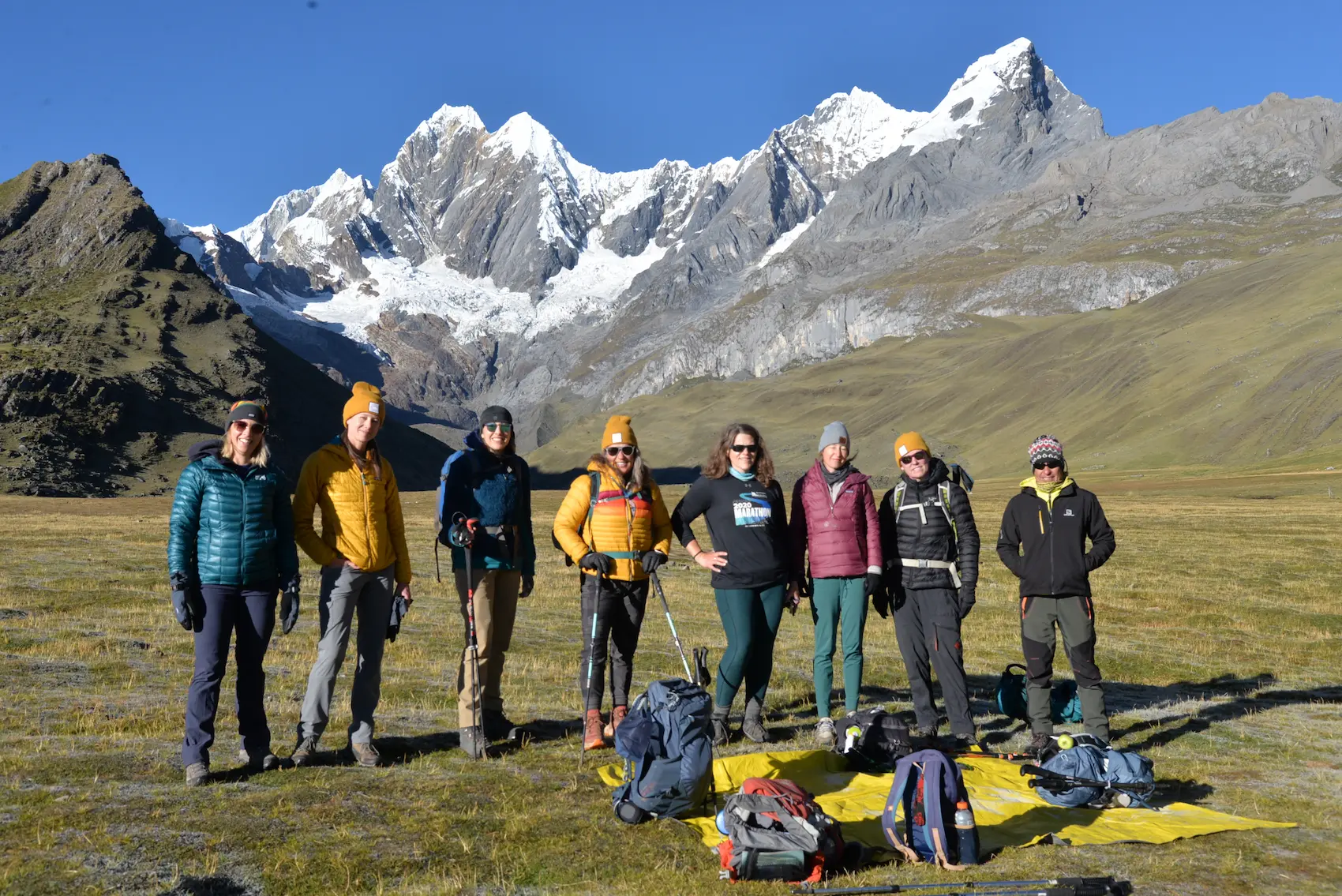
OVERVIEW
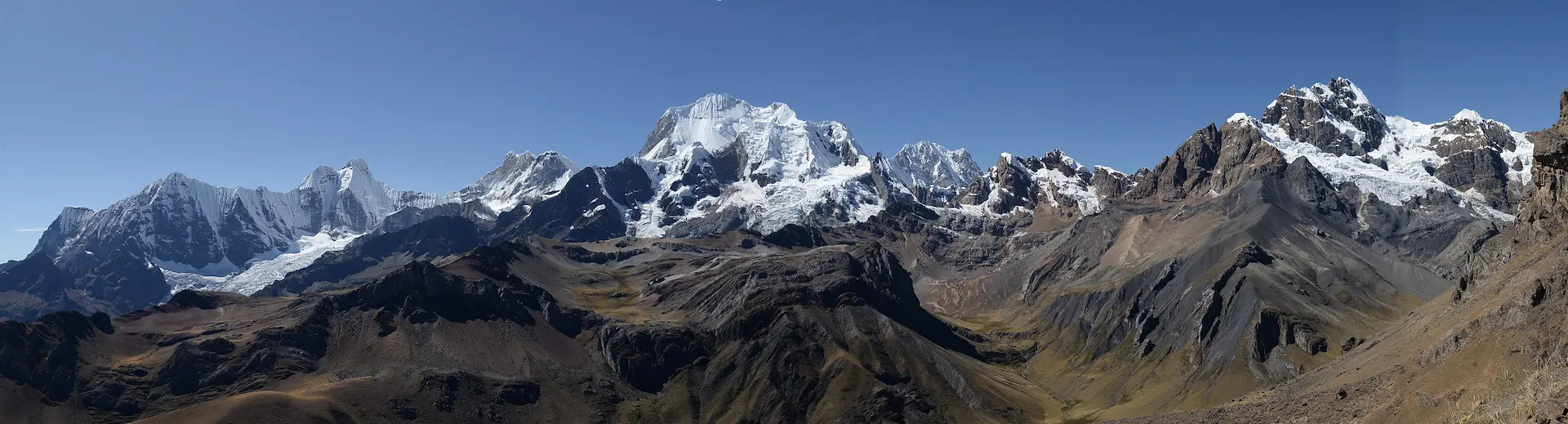
The Classic Huayhuash Trek is an unforgettable journey through the breathtaking landscapes of the Huayhuash Mountain Range. Starting in Cuartelhuain, this 10-day itinerary is designed to explore the region’s most iconic highlights in a gradual and immersive way.
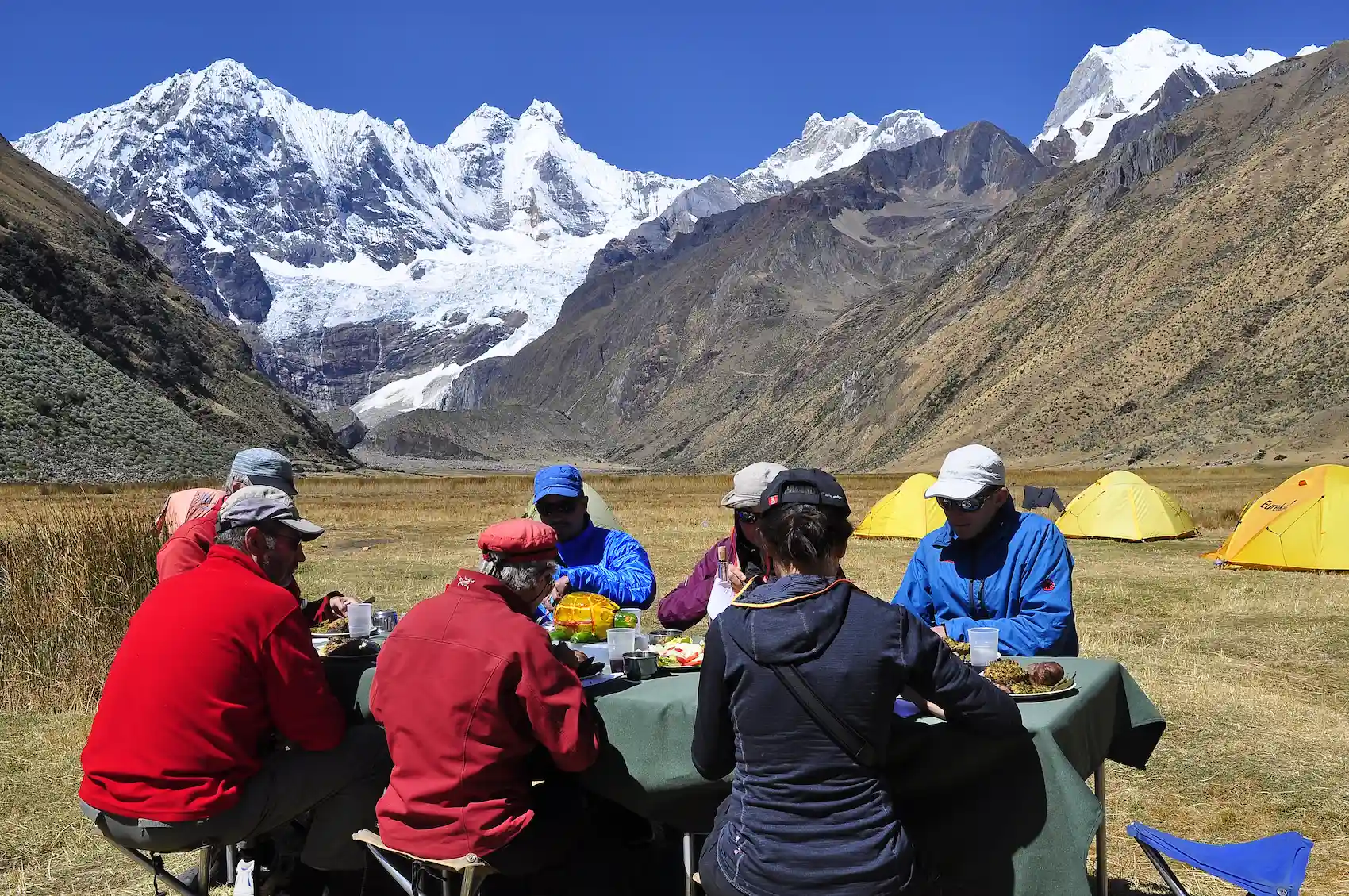
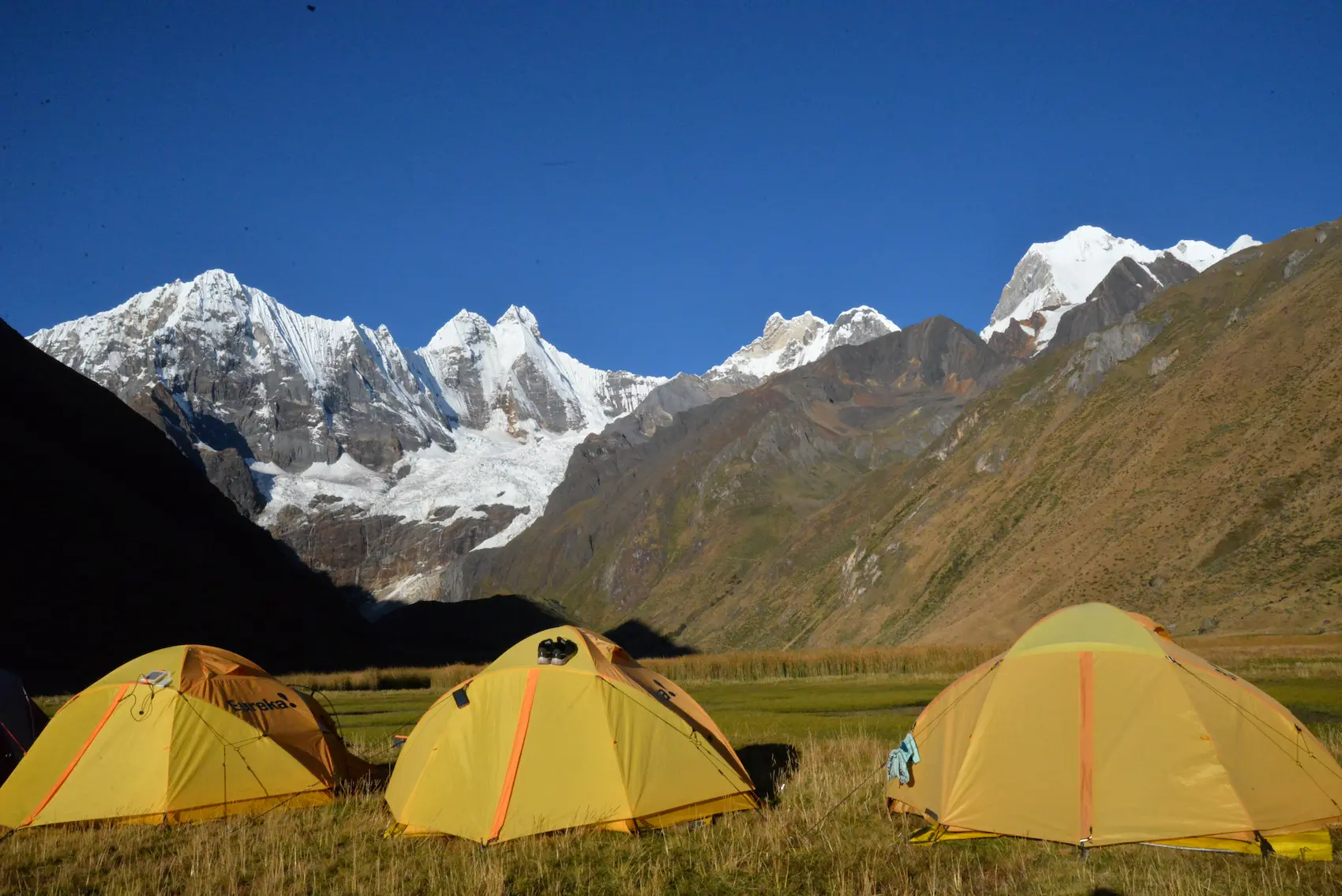
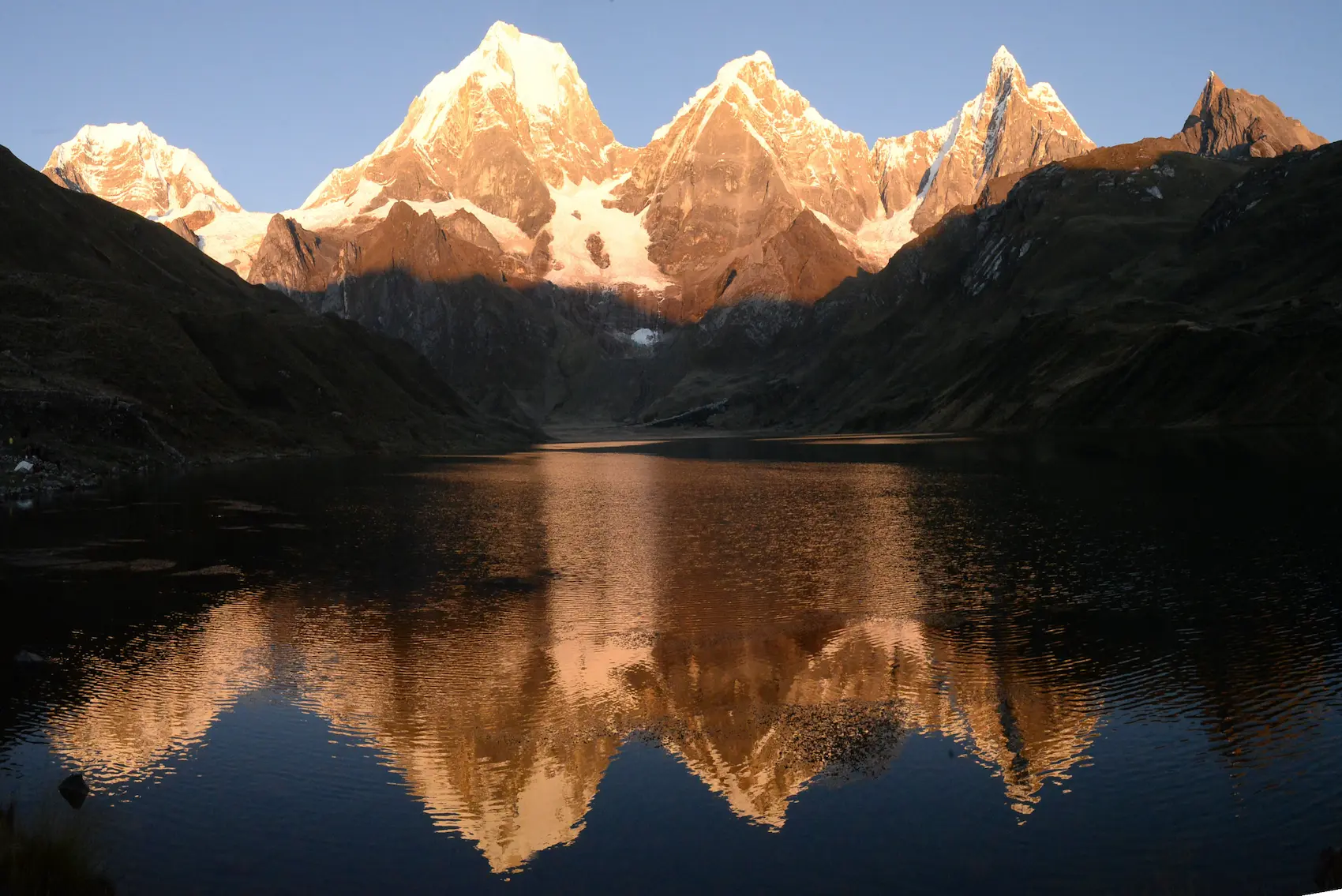
Approaching from the northeast, the route follows the eastern side of the range, revealing snow-capped peaks, high passes, and remote valleys illuminated by stunning sunrises. Along the way, we’ll camp at remarkable sites like Cahuacocha and Jahuacocha, surrounded by crystal-clear lakes and panoramic mountain views—an ideal adventure for those seeking a true connection with the Andes.
Highlights
- Spectacular views of towering snow-capped peaks and dramatic Andean landscapes
- Scenic high mountain passes with unforgettable panoramic vistas
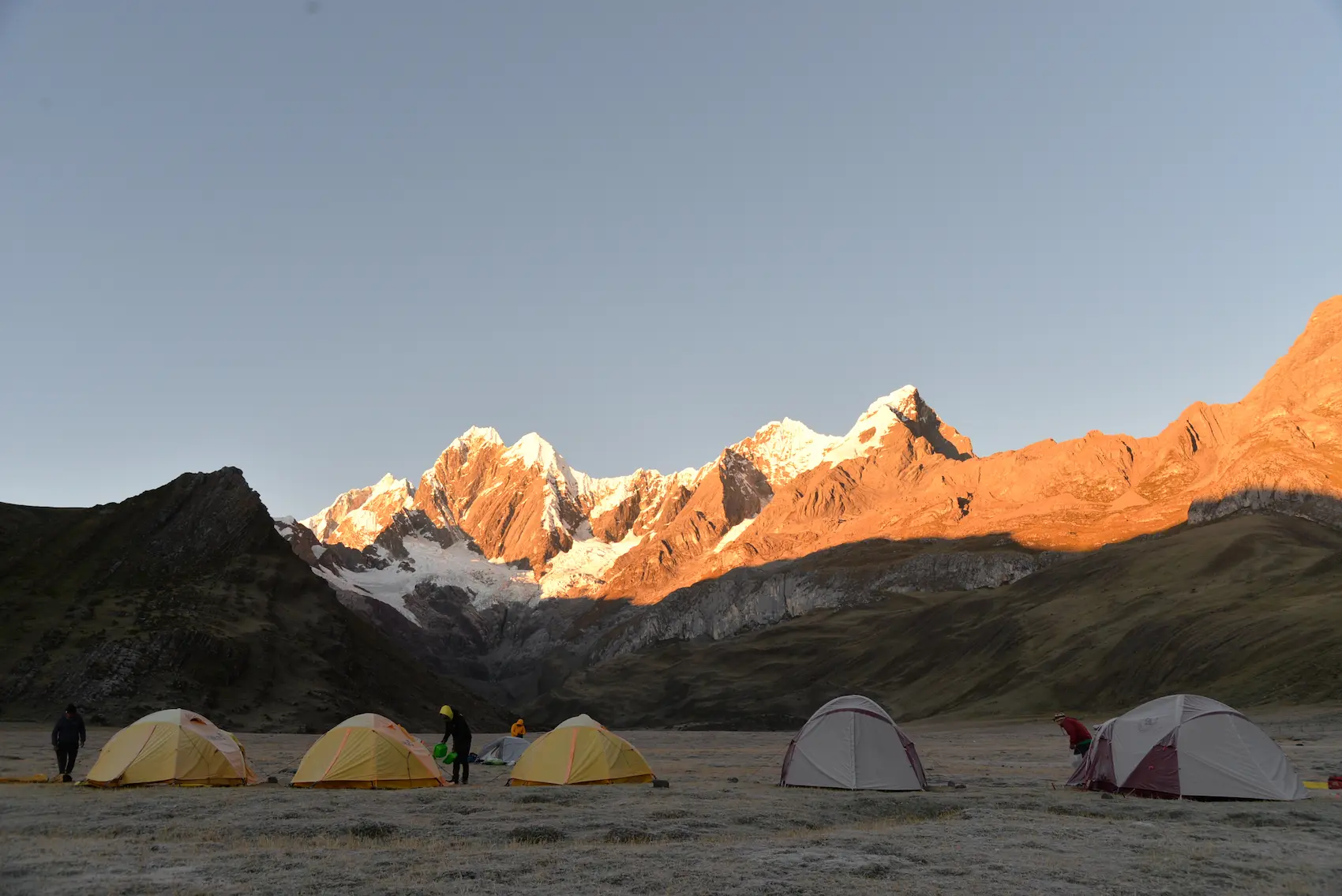
- Stunning sunrise and sunset moments over the eastern range
- Campsites in iconic locations such as Carhuacocha and Jahuacocha
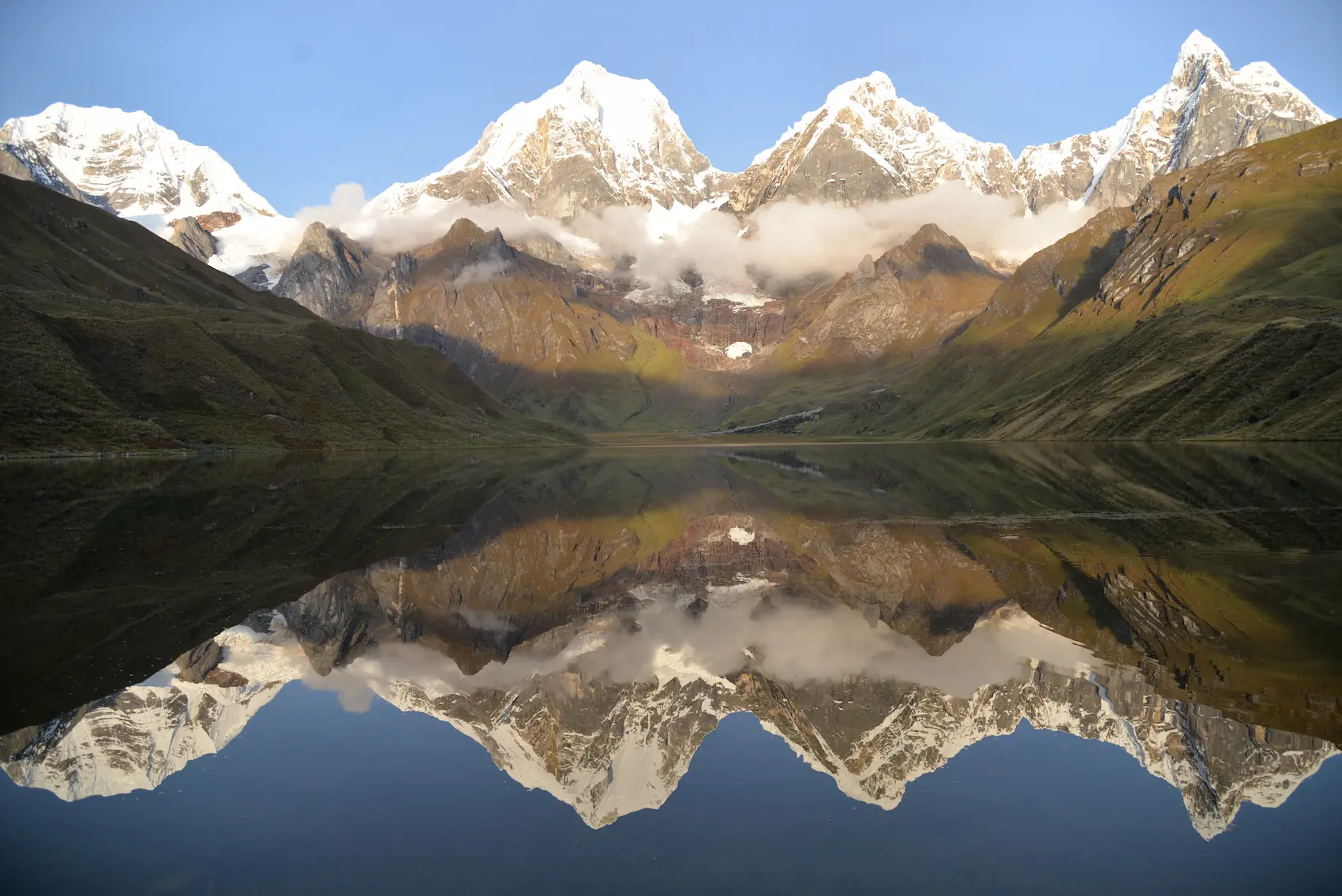
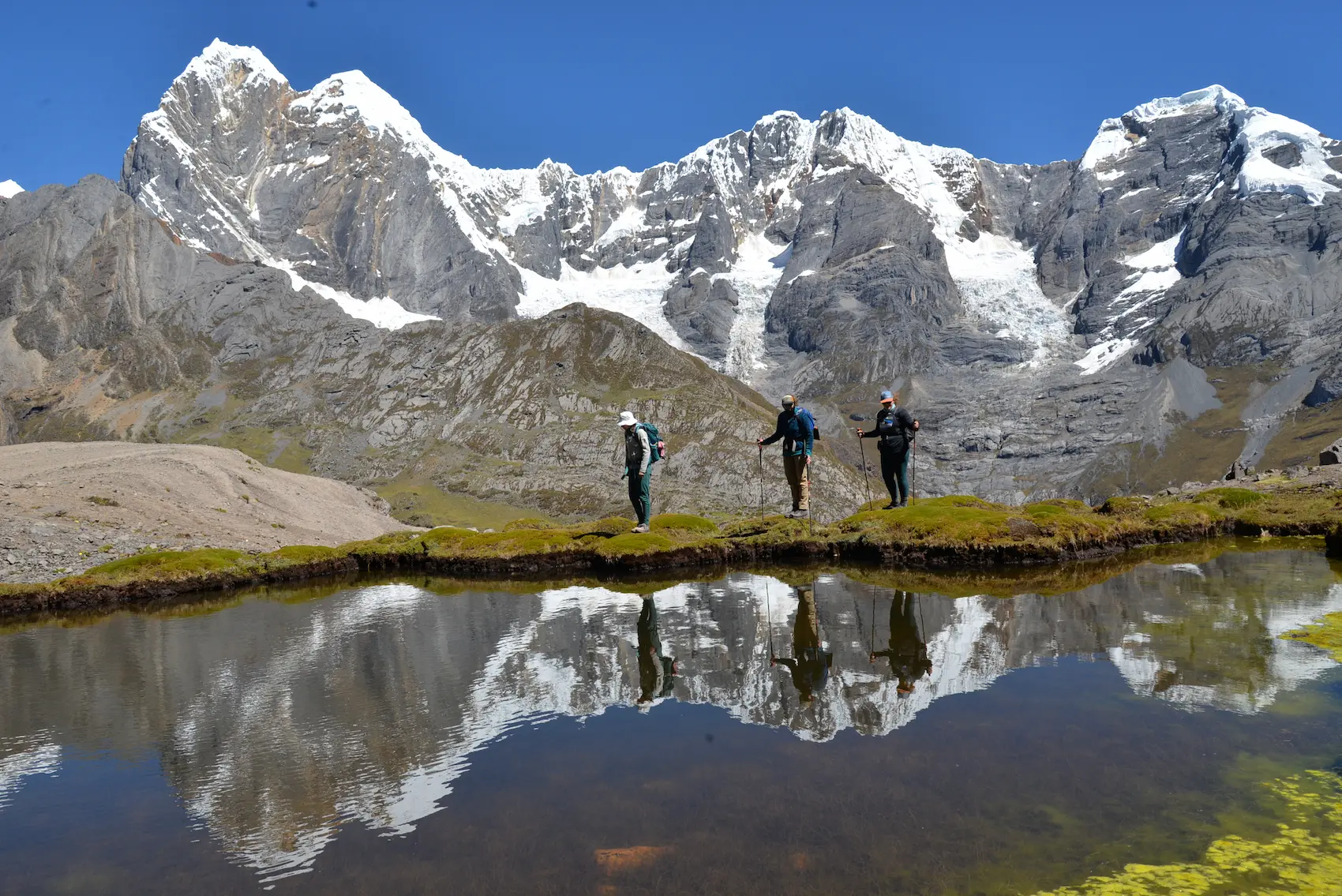
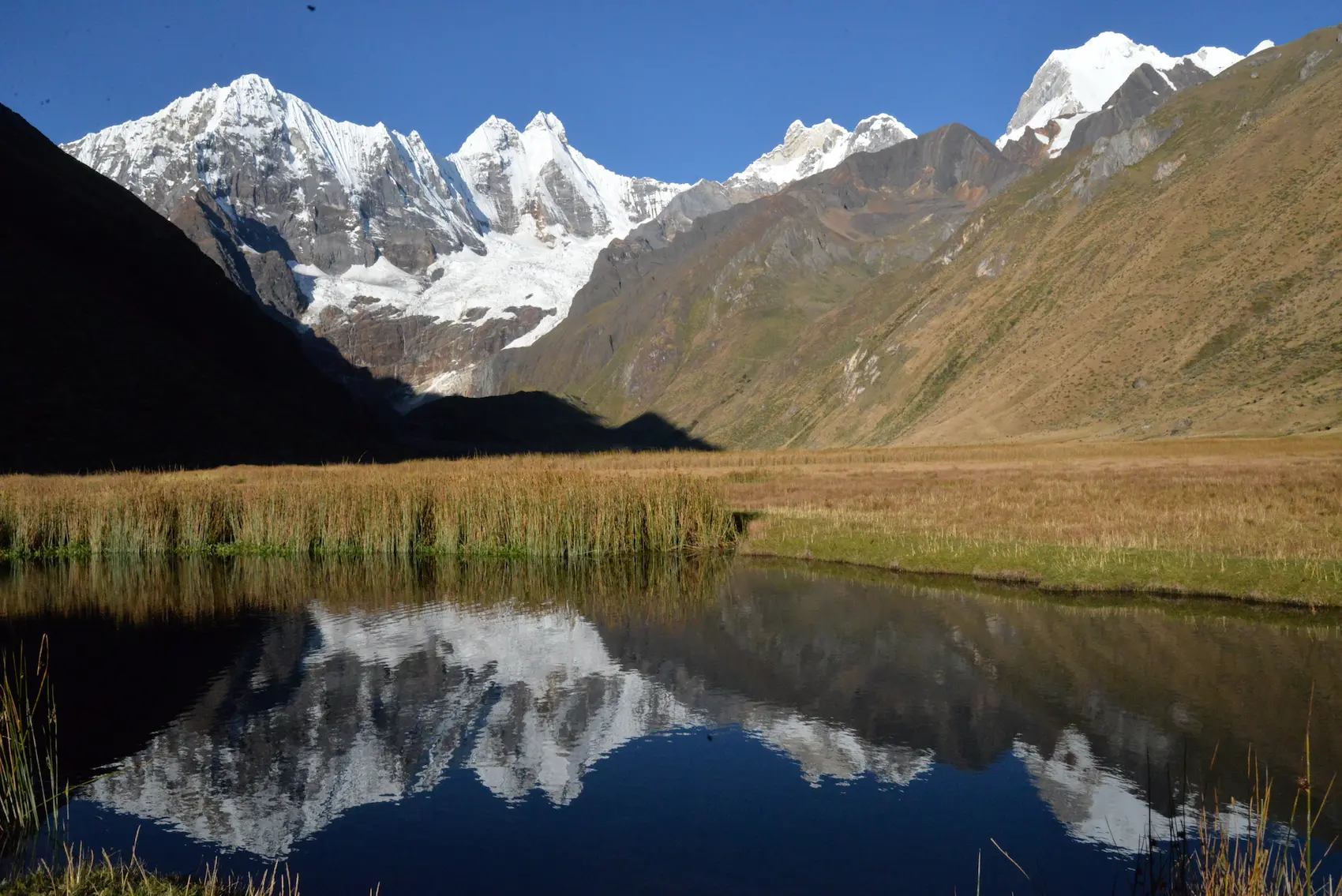
- Crystal-clear alpine lakes reflecting the surrounding mountains
- Rich cultural encounters with local Andean communities
- A complete and immersive journey through one of the world’s most beautiful trekking circuits
ITINERARY
Day 01: Drive to Cuartelhuain, our first campsite in the Cordillera Huayhuash, the head trail of our Trek.
We start our day early, heading south along the paved road for about two hours to Chiquian. Along the way, we pause at a viewpoint to admire the stunning Huayhuash Mountain Range, including Yerupajá, Peru’s second-highest peak.
From there, we continue along a dirt road toward Llamac Village, the gateway to the Huayhuash mountain range. Passing Pocpa Village and Pallca Mine, we reach the entrance of the Rondoy Valley at 4,050 m (13,287 ft), where rolling grasslands unfold beneath the snow-capped peaks.
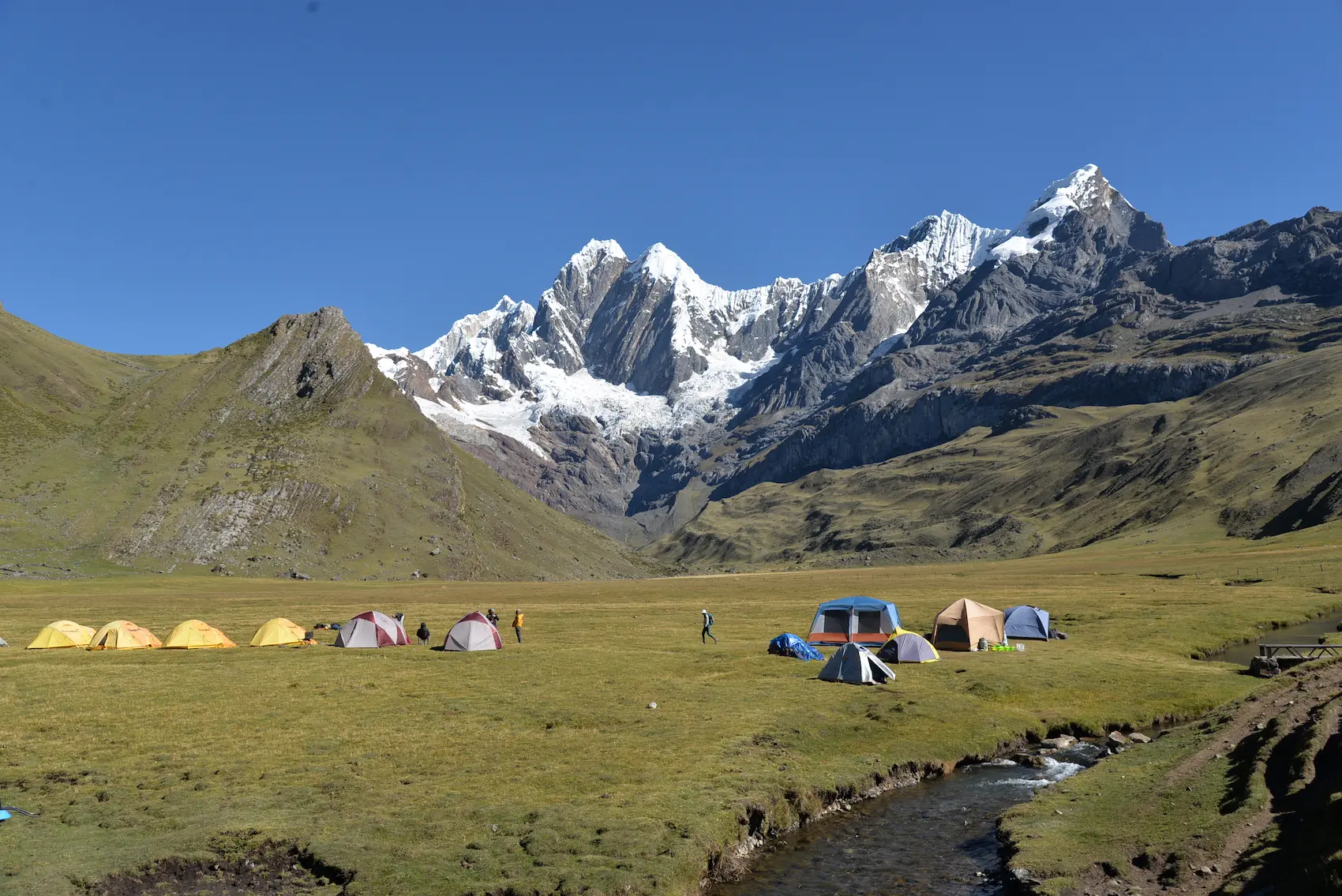
Our camp for the night is at Cuartelhuain at 4,170 m (13,681 ft), the perfect base to soak in the breathtaking highland scenery.
Driving distance: 162 km (101 mi) – Time: 5 hours
Day 02: Cross the Cacananpunta Pass to Janca below Mitacocha Lake.
We begin the day by crossing the Cacananpunta Pass (4,650 m / 15,256 ft) at the northern end of the massif. This is the Continental Divide, where waters from this point flow toward the Amazon and the Atlantic.
The pass is a favorite spot for the Andean Condor, and with some luck, we’ll see these majestic birds soaring overhead. From here, a rugged descent through a multicolored landscape brings us to a beautiful, flat, grassy campsite at Janca (4,230 m / 13,877 ft), near Lake Mitucocha, whose turquoise waters perfectly reflect the peaks of Ninashanca, Rondoy, and Jirishanca.
This is a relatively short day to help with altitude acclimatization, but for those with extra energy, an optional afternoon hike to the lake offers stunning views.
Trekking distance: 8.3 km (5.2 mi) – Time: 5-6 hours
Day 03: Hike over Carhuac Pass to Lake Carhuacocha
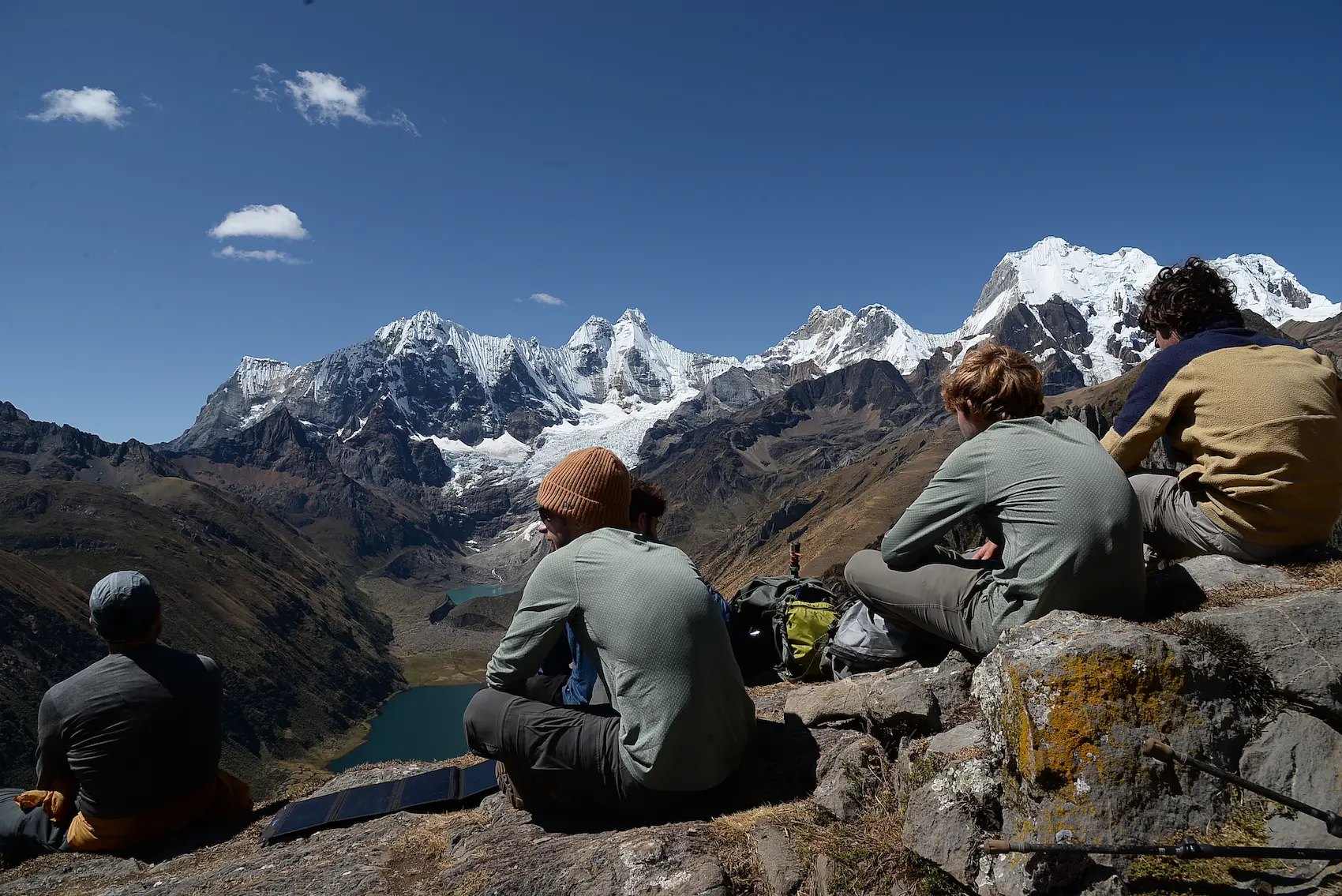
Today’s hike takes us over the Carhuac Pass (4,625 m / 15,174 ft). The climb is a bit longer but not too steep, offering spectacular views of Yerupajá, the highest peak in the Huayhuash Mountain Range at 6,634 m (21,765 ft).
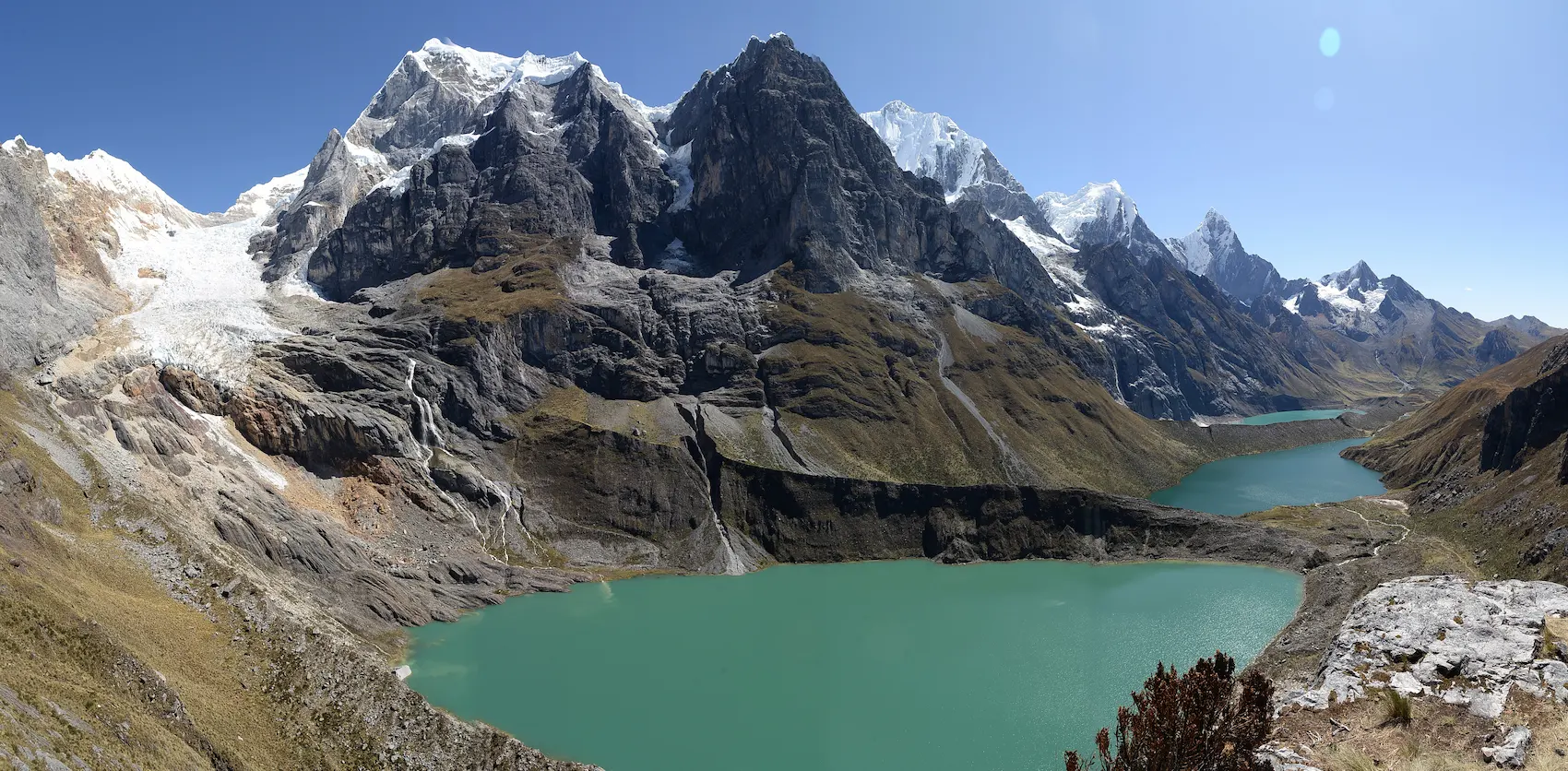
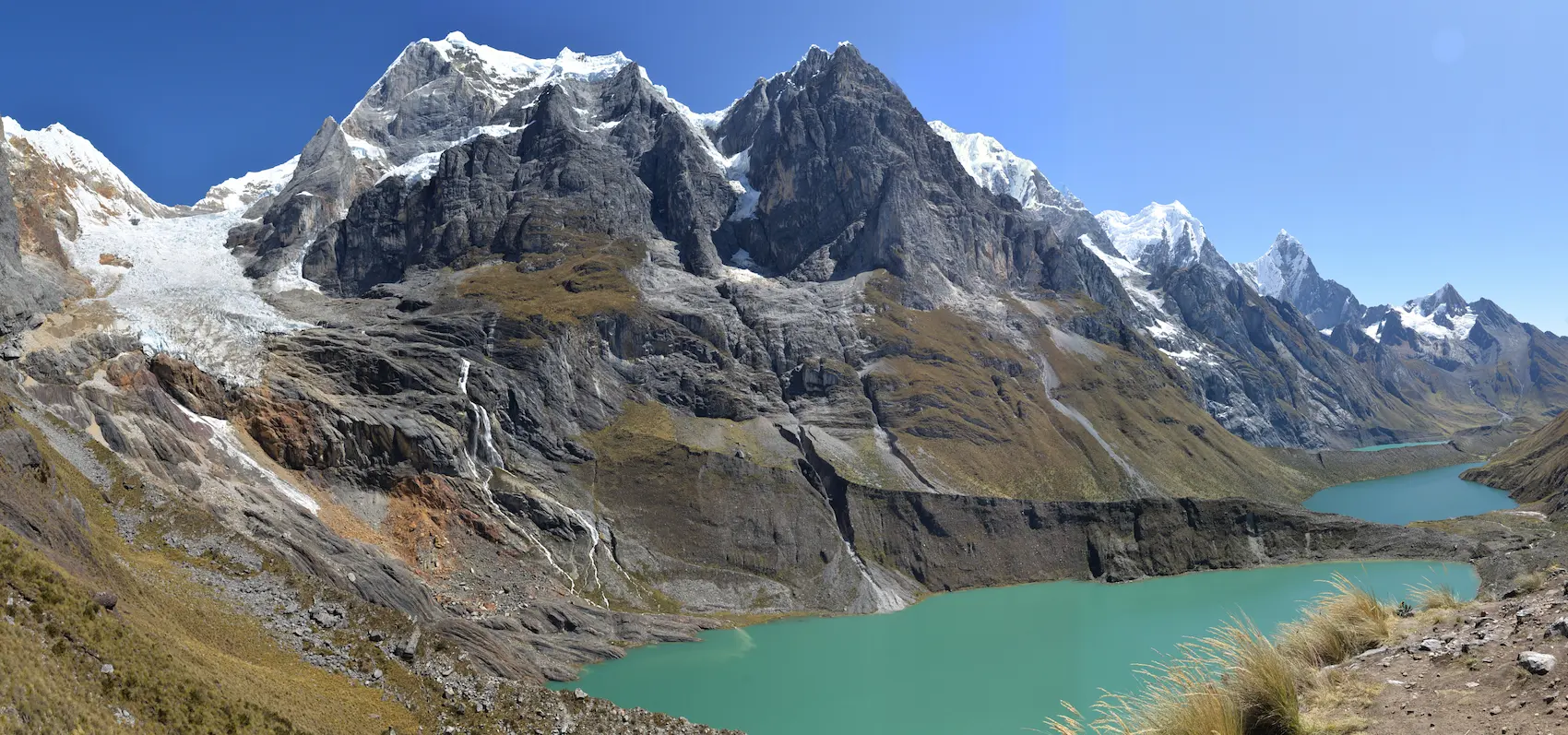
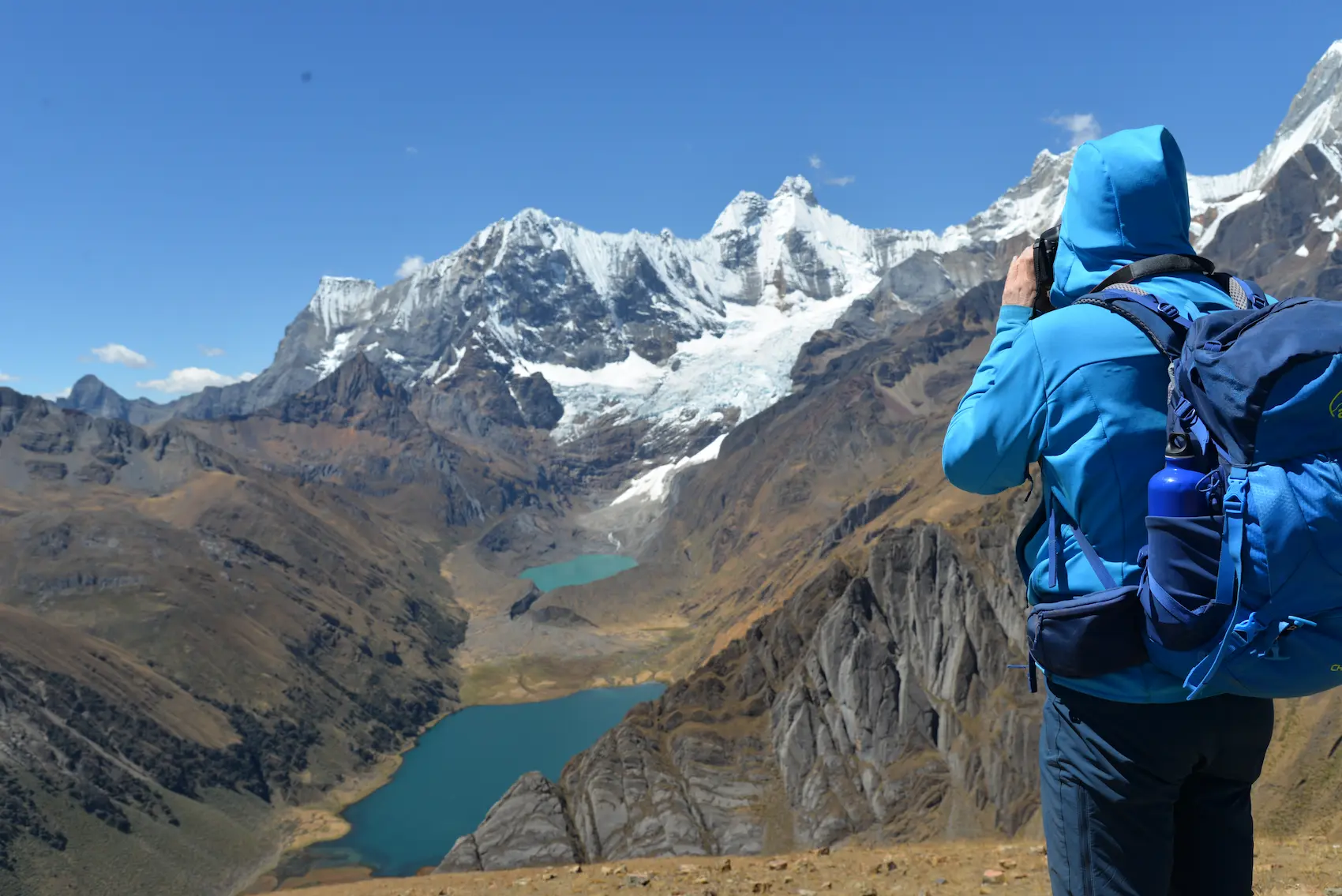
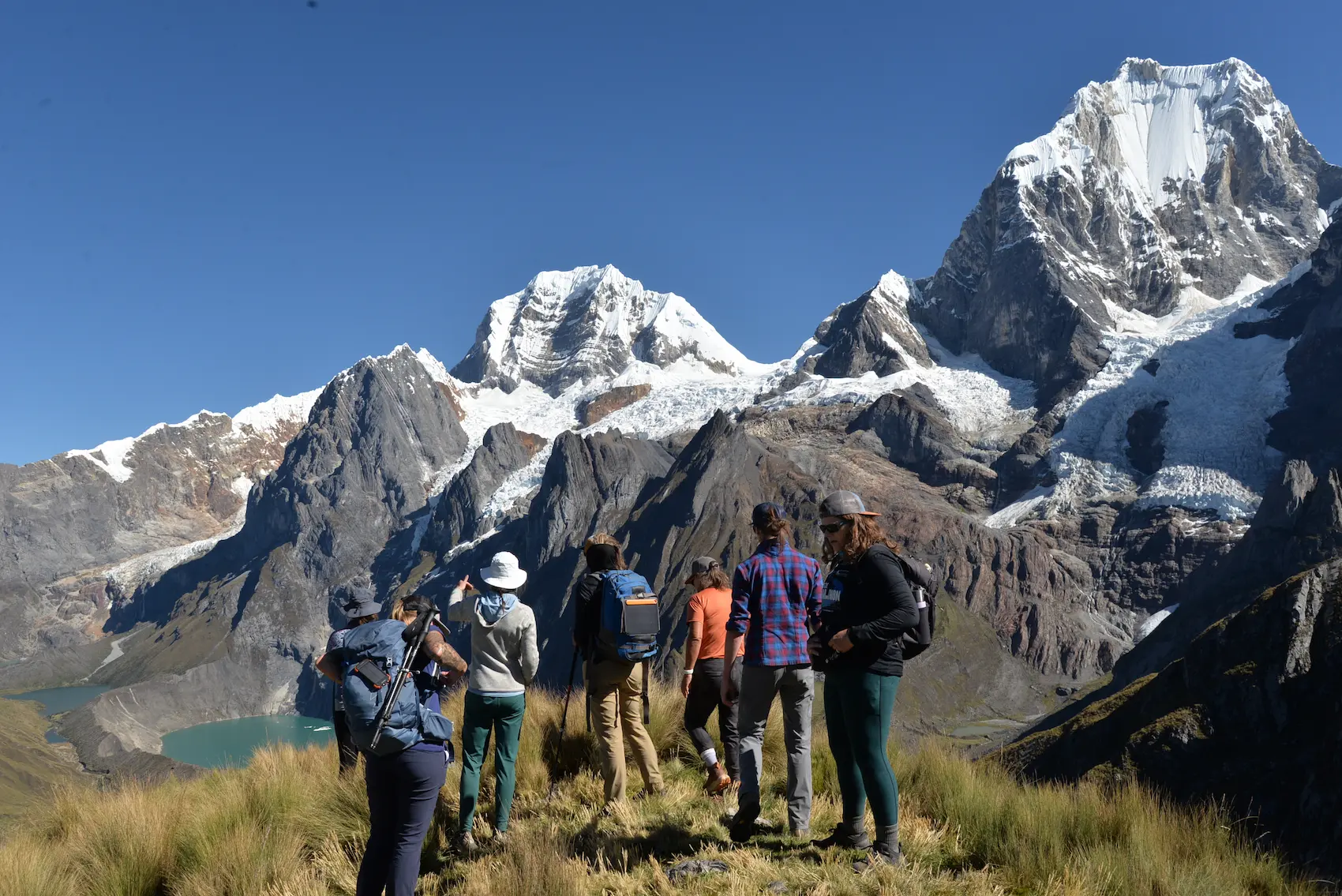
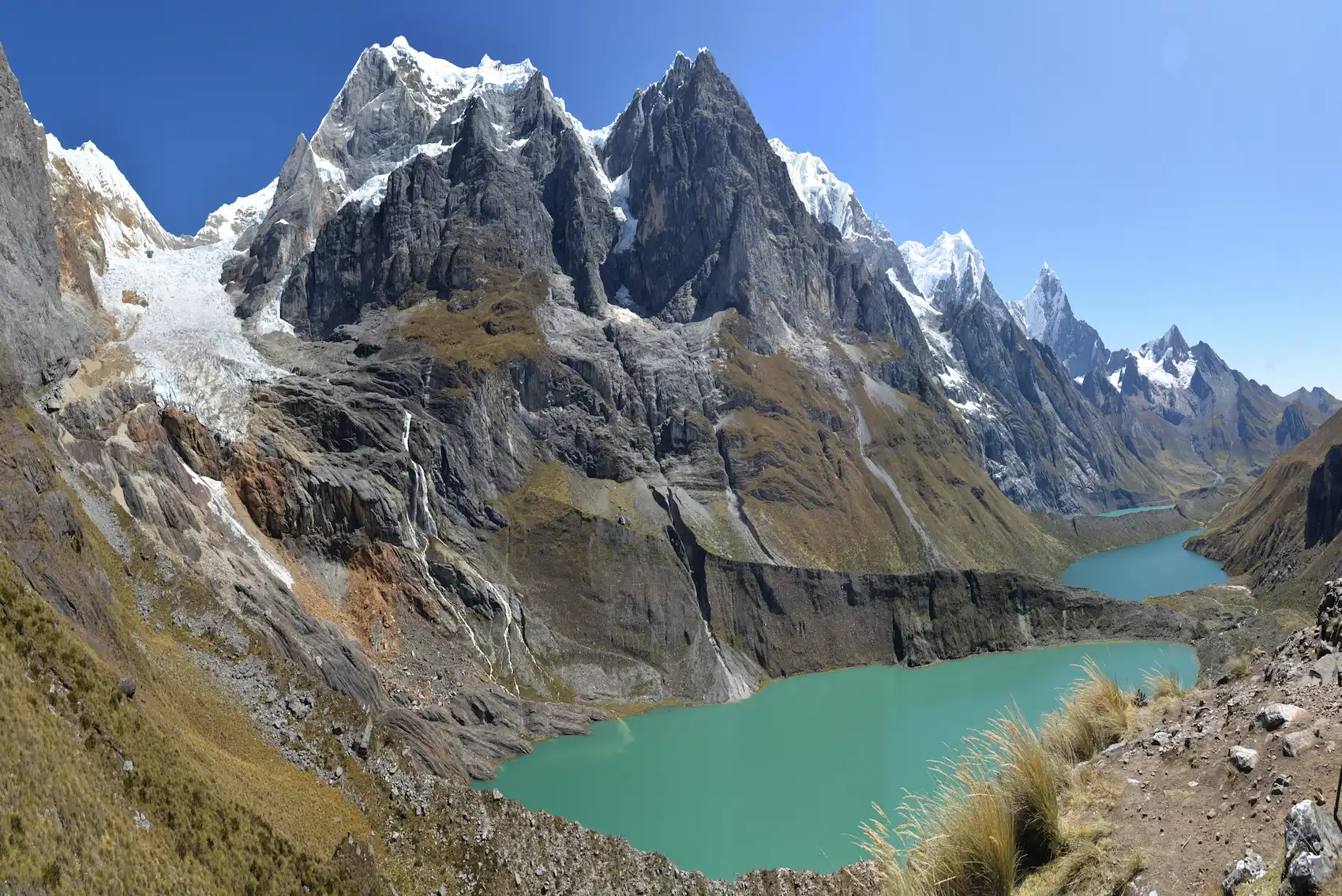
On the descent, we reach the rim of a hanging valley, overlooking the crystalline blue-green waters of Lake Carhuacocha. Our campsite, situated just below the lake (4,152 m / 13,622 ft), is framed by an incredible panorama of towering peaks and hanging glaciers, whose sheer presence makes us feel dwarfed by the landscape.
Trekking distance: 9.8 km (6.1 mi) – Time: 5-6 hours
Day 04: Trek along the Siula route, cross Siula Pass. Descend to Huayhuash Camp
Photographers are advised to wake up before dawn this morning to catch the sunrise over the lake and snowy peaks from our campsite. You’ll know it was worth it when you witness the sun’s first rays catching the peak of Mt Yerupaja (6634 m / 21,765 ft).
Today’s trek is a long gradual climb up from a verdant valley accompanied by the splendor of Yerupaja, Yerupaja Chico, Siula Grande, Jirishanca, Santa Rosa, and Carnicero. We’ll also have the good fortune of passing lakes Gangrajanca, Siula and Quesillacocha, each as pristine and crystal clear as the next. Finally, we’ll engage in a steep climb to the top of the rocky Siula Pass (4810 m / 15,781 ft) After the challenging climb, descend to Huayhuash Campsite (4340 m / 14,238 ft) and sleep nestled at the foot of Mount Trapecio and the three peaks of Jurua.
Trekking distance: 14 km (8.7 mi) – Time: 8-9 hours
Day 05: Traverse the Trapecio pass, past azure blue lakes to Pampa Cuyoc camp
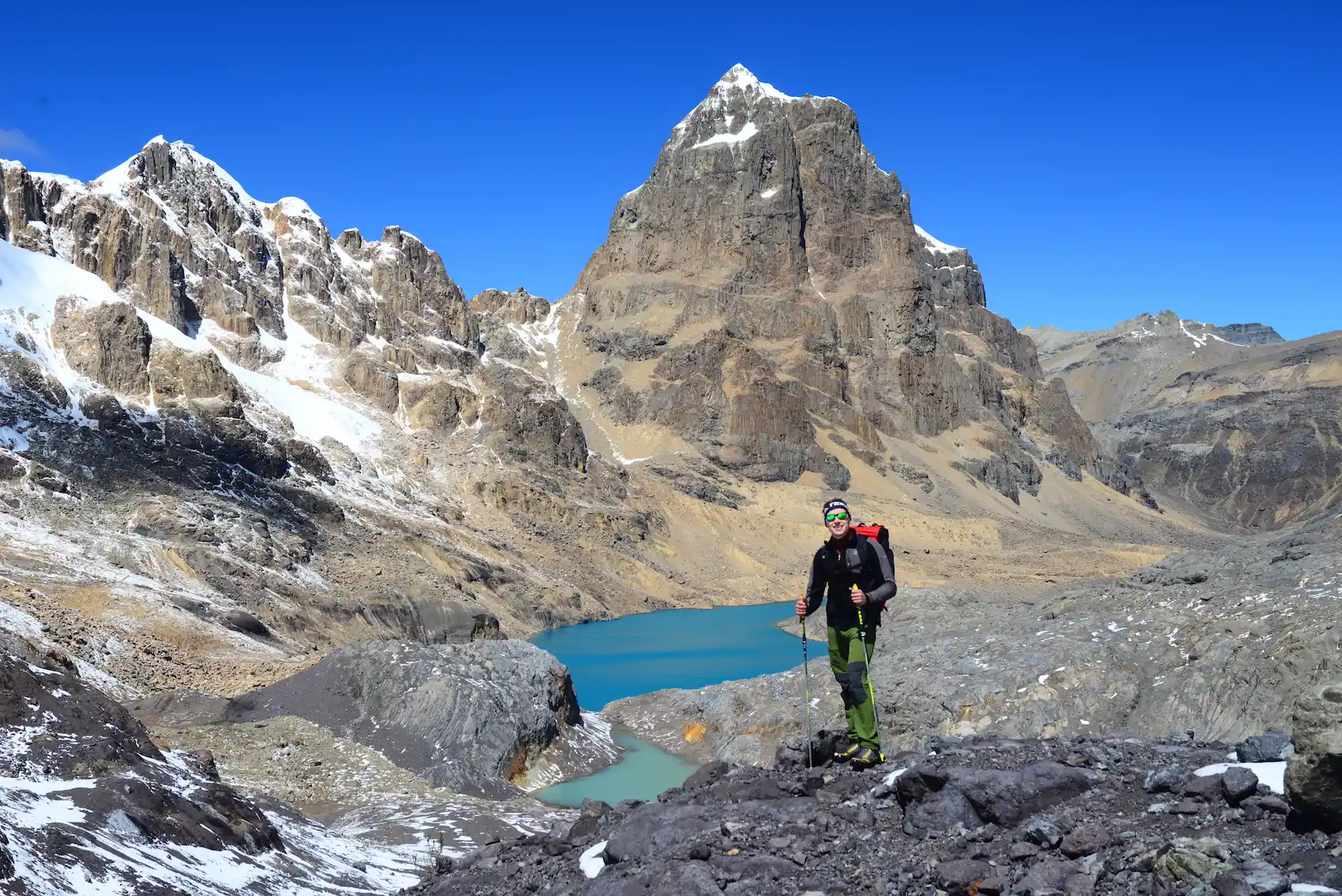
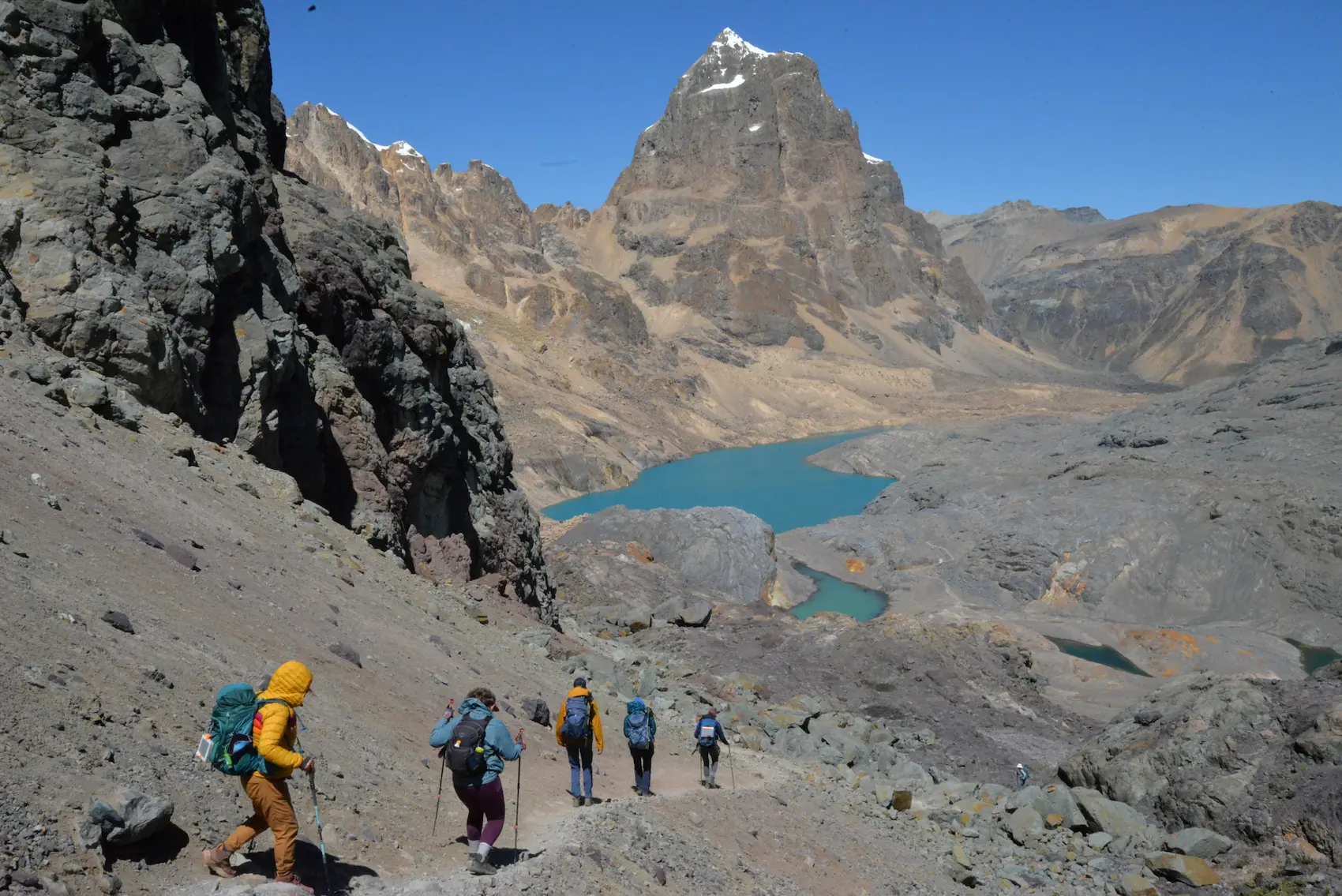
Our journey continues with a grueling ascent of 680 m (2,230 ft) to reach our fourth and one of the highest passes of the trek: Trapecio Punta (5,020 m / 16,470 ft). At the summit, the panorama is simply staggering—towering peaks of Trapecio, Puscanturpa, and the southern mountains of the Raura Mountain Range surround us, their icy crowns gleaming under the sun.
The descent is no less dramatic: a steep, jagged trail plunges 250 m (820 ft), followed by a tense crossing of an ancient glacier moraine. Finally, we arrive at our campsite on the plains of Cuyoc, a serene grassy valley at 4,511 m (14,800 ft). Here, the colossal Cuyoc Peak towers above us, reminding us of the raw power and majesty of the Andes. Tonight, we rest in the shadow of giants.
Trekking distance: 11.4 km (7.1 mi) – Time: 7-8 hours
Day 06: Trek to the mouth of the Huayllapa Village and climb to Huatiac Camp
We retrace our steps down the Sarapococha Valley, descending into the warmer, cultivated lands of the remote village of Huayllapa (3,577 m / 11,735 ft). Along the way, enjoy stunning alpine waterfalls and the tranquil beauty of highland farmland.
In the afternoon, a steep climb takes us to Huatiac, a high grazing meadow at 4,320 m (14,173 ft), nestled in the shadow of Diablo Mudo, the “Dumb Devil.” This is often considered the toughest day of the trek, with a challenging afternoon hike under sometimes-hot conditions—but the dramatic scenery makes every step worthwhile.
Trekking distance: 18.5 km (11.5 mi) – Time: 9 hours
Day 07: Hike to Gashpapampa Camp via Punta Tapush Pass
Finally, a relatively easy day as we cross the Punta Tapush Pass (4,770 m / 15,650 ft). After the pass, we descend for about an hour to reach our next campsite at Gashpapampa (4,520 m / 14,829 ft).
From camp, enjoy a glorious sunset behind the towering Mount Diablo Mudo, a perfect way to relax and reflect on the trek’s high-altitude adventures.
Trekking distance: 6.5 km (4.1 mi) – Time: 4 hours
Day 08: Trek up into the spectacular upper part of the Huacrish Valley. Descend to Jahuacocha Camp
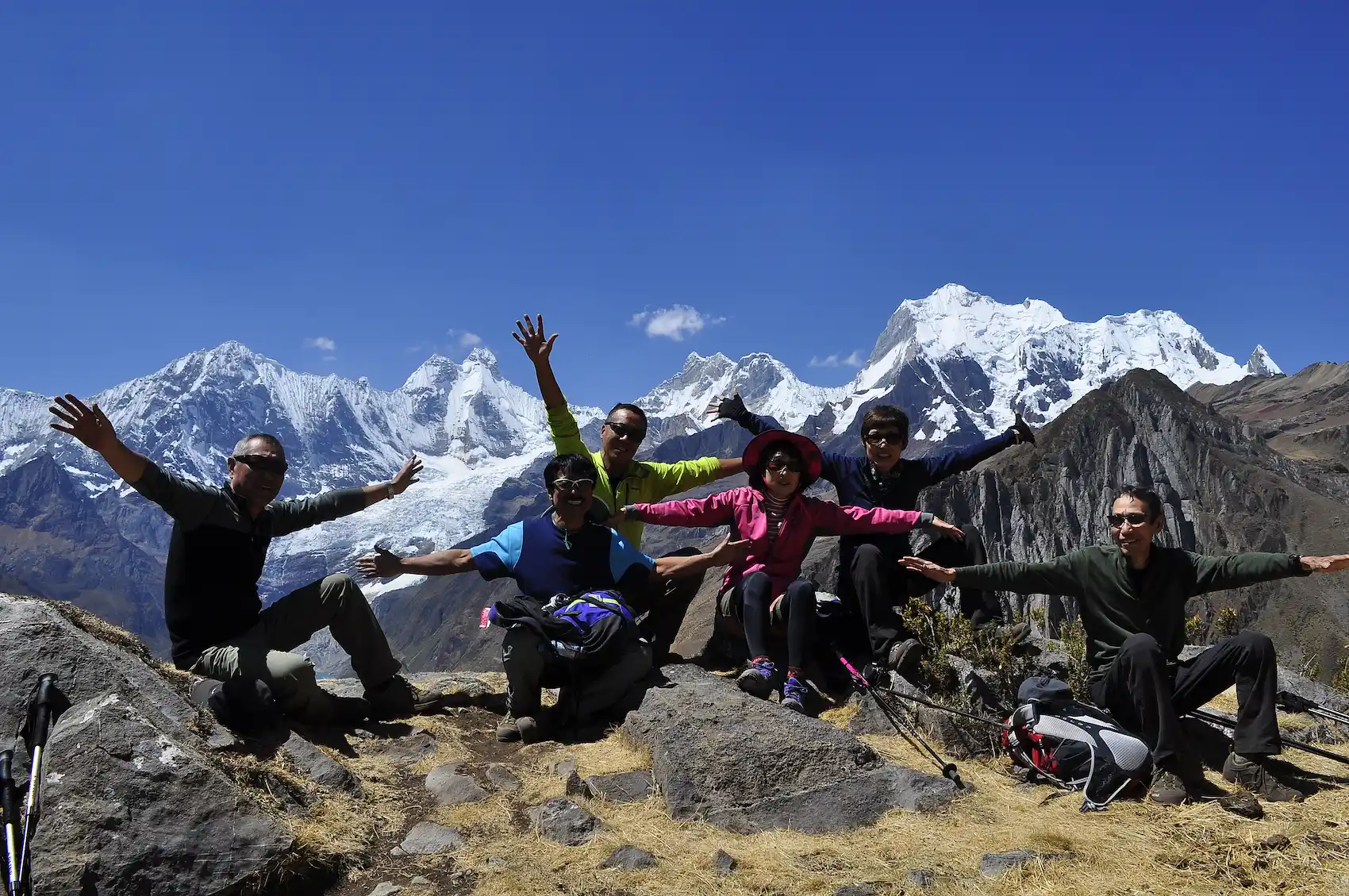
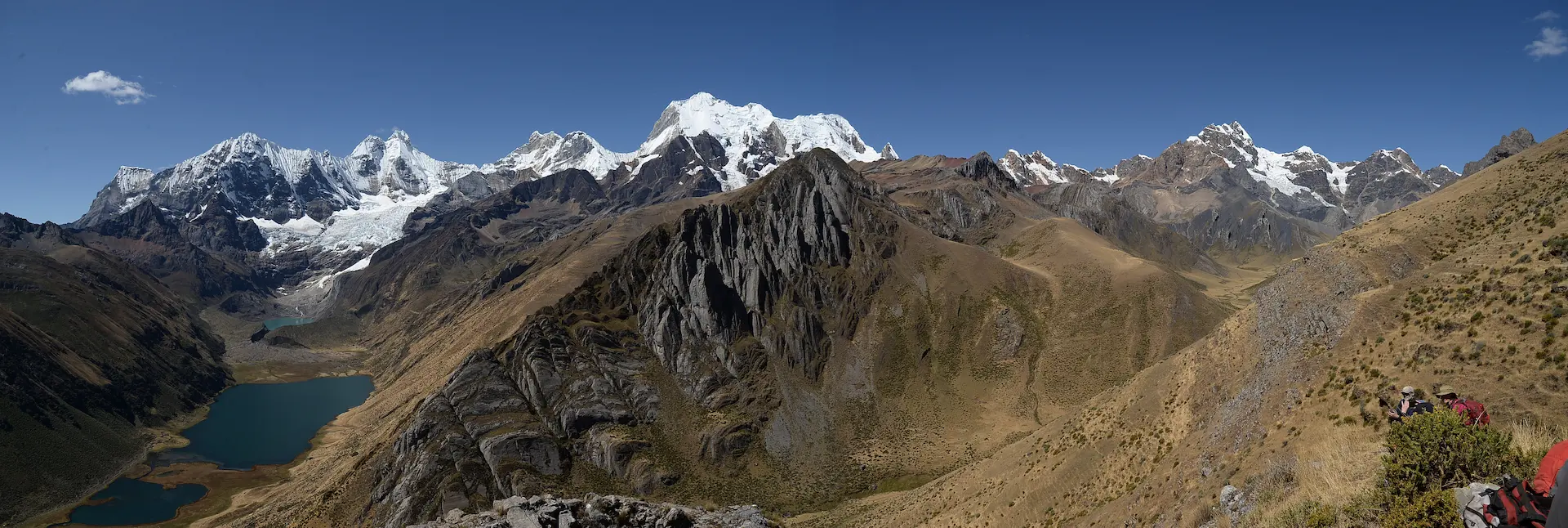
We trek down into the Angoshcancha Valley, passing through a forest of Quenual (Paper Bark) trees, before ascending to our eighth and final pass: the scree-covered Yaucha Pass at 4,850 m (15,912 ft). On a clear day, the panoramas are breathtaking, with views of the highest peaks of the Huayhuash Mountain Range and distant vistas of the towering White Mountain Range. This is also a prime spot to see Andean condors soaring above.
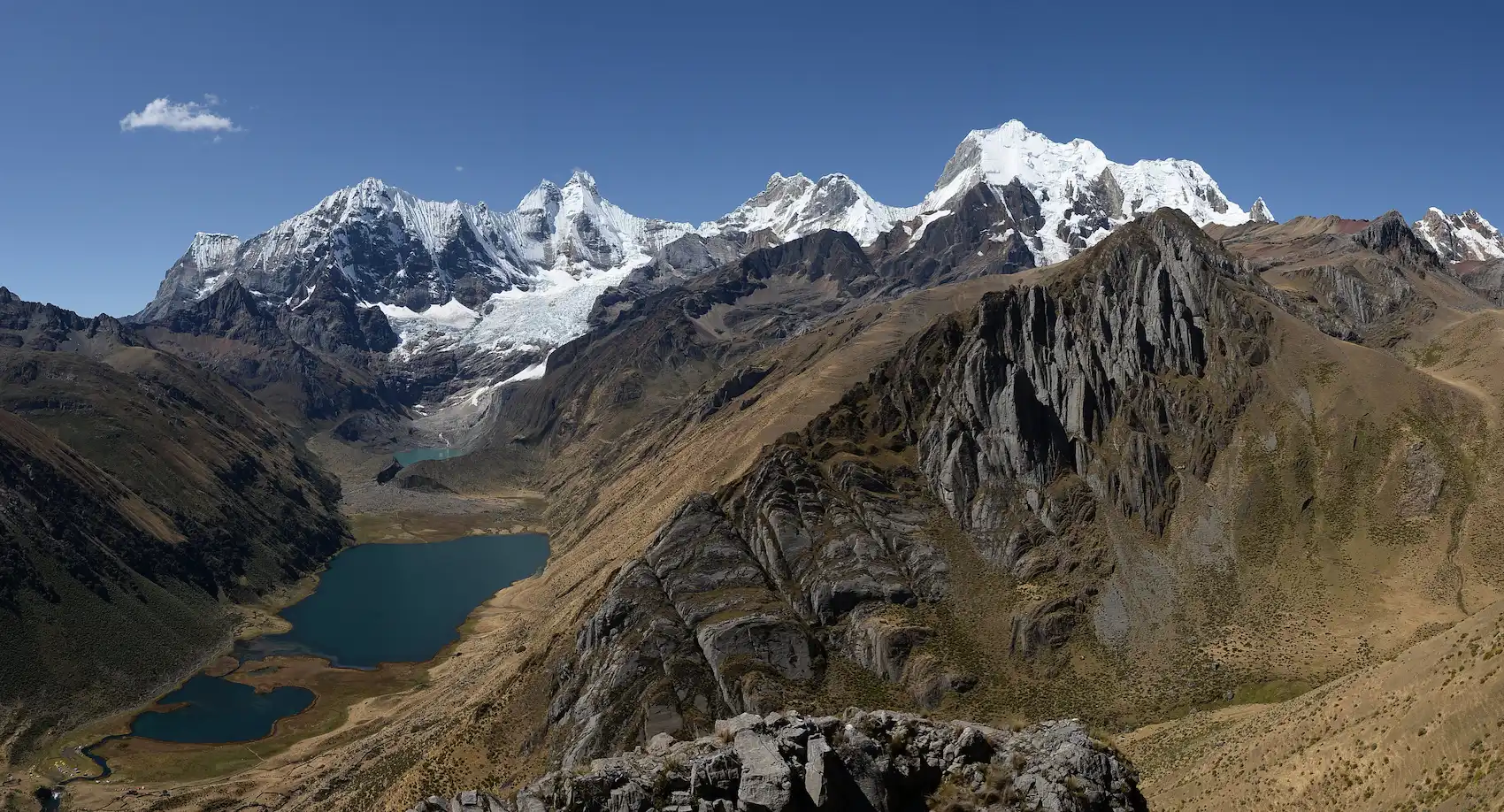
A long descent brings us to the stunning Laguna Jahuacocha, widely regarded as one of the most scenic gems of the entire range. We spend the night at 4,050 m (13,287 ft), surrounded by the awe-inspiring beauty of the high Andes.
Trekking distance: 9.2 km (5.7 mi) – Time: 4-5 hours
Day 09: Jahuacocha
Jahuacocha lake sits at 4,050 m (13,287) beneath the glacier-covered west faces of Yerupajá, Jirishanca, Rasac, Rondoy, and El Toro. By day or moonlight, the lake is exquisitely beautiful, teeming with birdlife including Puna ibis, Andean geese, and more.
The surrounding area offers fantastic hiking opportunities, both around the lake and along the higher trails above. The lake and nearby river are home to trout, and we’ll try our hand at catching enough for dinner.
For those who wish to rest, we can enjoy a relaxing day at camp, or opt for a challenging hike to Rondoy Pass or below Yerupajá to Lake Solteracocha, making it a day full of adventure and unforgettable scenery.
Day 10: Climb the Mancanpunta Pass and descend to Pocpa Village and drive to Huaraz
With our successful completion of this special version of Huayhuash trekking circuit, we’ll enjoy an early breakfast and depart from camp for the town of Huaraz. We will gradually ascend to Mancanpunta Pass at 4550 m (14,928 ft) and after a brief rest at this vantage point, taking in our final jaw-dropping view of the surrounding Andean ranges, we will descend a steep gravelly trail to Pocpa (3550 m / 11,647 ft). In Pocpa, our private transportation awaits us to transfer us back to Huaraz, for a much-deserved rest and time to contemplate the remote treasure-filled adventure we’ve just experienced.
Trekking distance: 11.5 km (7.2 mi) – Time: 5-6 hours
Bus ride: 140 km (87 mi) – Time: 4 hours
INCLUDED
- Transportation
- Professional bilingual guide
- Double occupancy tents with Thermarest sleeping pads
- All meals during trek
- Non-alcoholic drinks
- Kitchen and dining tents
- Cook and field staff
- Horses and drivers
- Entrance tickets
- Solar energy lamps
- Eco toilets
- Adequate garbage disposal
- First aid kit and oxygen tank
Not included
- Personal travel insurance
- Laundry service
- Airline tickets
- Sleeping bags (rent available)
- Personal gear
- Alcoholic beverages
- Additional services
- Tips
- Extras
What to take
- Regular and long wicking first layer for cold weather, like polyester, nylon, or merino wool
- Short-sleeved shirts or t-shirts, breathable fabrics, like nylon and polyester
- Light-colored long-sleeved shirts or t-shirts
- QuickDry Pants, trekking pants, and shorts
- Insulated long-sleeve jacket (fleece, synthetic, down, merino wool)
- Liner gloves
- Light cap and beany
- Rain jacket (in the rainy season, bring rain pants)
- Breathable sports socks or hiking socks
- Warm socks for nights
- Multifunctional headwear (e.g. Buff)
- Waterproof and breathable hiking boots
- Comfortable and lightweight shoes for campsite
- Sleeping Bag (0°/32° to -15°/ 5°) (rent available)
- Day Pack (preferably with rain cover)
- Trekking Poles (available to rent)
- Waterproof duffle bag
- Sunglasses
- Headlamp
- Microfiber towel
- Sunblock, lip balm, and insect repellent
- Reusable water bottle or vacuum bottle
- Portable Power Bank (to charge lamps, etc)
- Personal First Aid Kit (recommended)
On each trip we carry a medical kit, but we suggest you bring a small personal First-Aid Kit for bruises and blisters. Knee and ankle braces are sometimes useful especially if you suffer from weak knees or ankles. Include any special medication your doctor might suggest for you.